02. Quantum Revolution: The Day Classical Computing Died Forever
Imagine: by 2033, saying “my computer is still calculating” will sound as quaint as waiting for a horse to be shod. Ready for a world where the impossible becomes instant—and classical computing quietly fades into history?
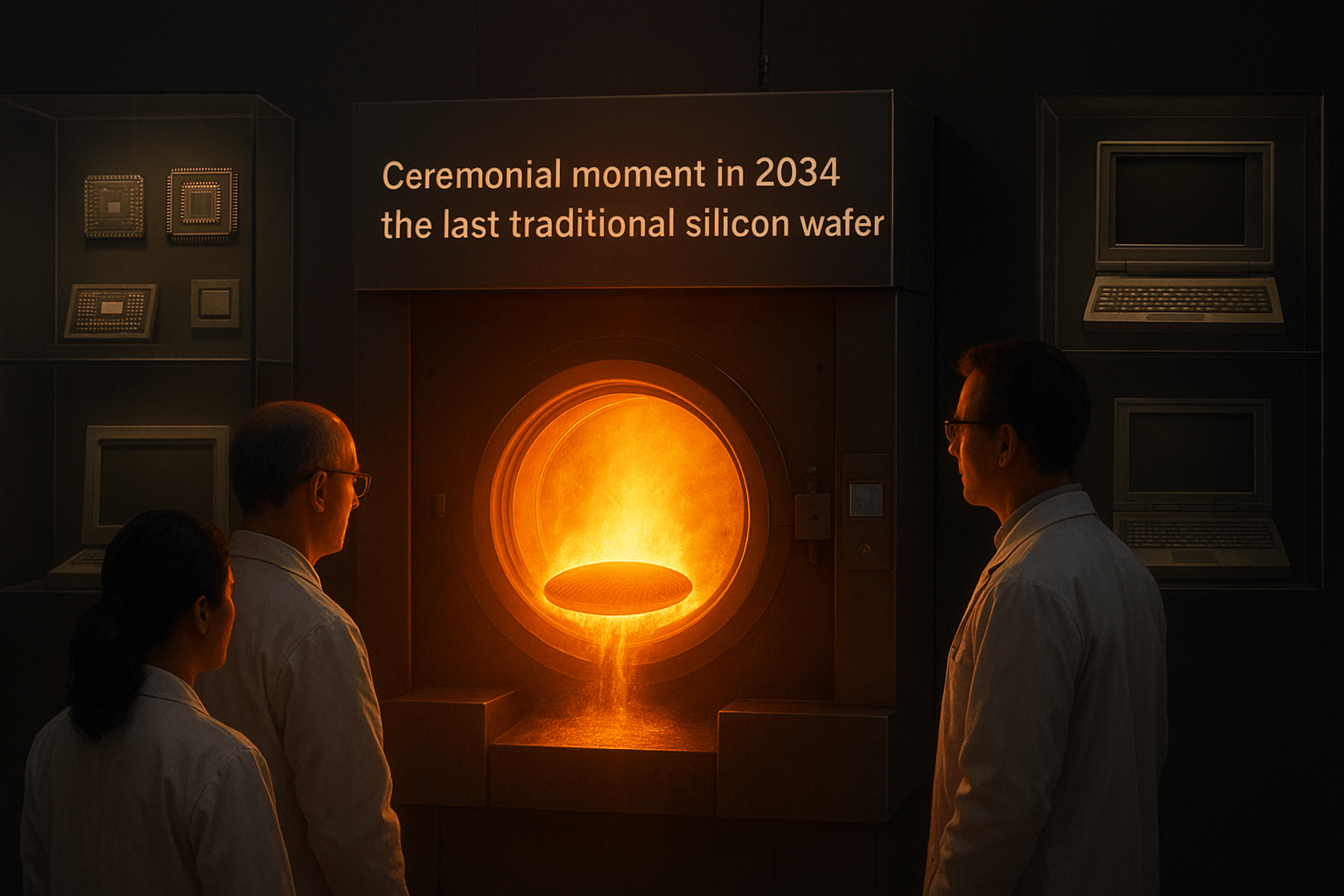
The shift isn’t coming. It’s already here, locked into contracts and timelines that can’t be undone. In 2031, Google, PsiQuantum, and Amazon will power up the first million-logical-qubit, fully fault-tolerant machines. By 2033, the world’s last great classical supercomputer—descendant of today’s Frontier—will be ceremonially shut down, not from obsolescence alone, but because running it costs more than leasing an entire quantum cluster for a year. By 2035, every Fortune 500 balance sheet will list “quantum advantage” as a tangible asset. By 2040, over 60% of global compute power—measured in useful operations—will flow from qubits, not transistors.
This isn’t speculation. These are hard delivery dates baked into multi-billion-dollar contracts signed in 2024–2025, with massive penalties for delays.
Three unstoppable waves that have already shattered the old limits
-
Error-corrected logical qubits arrived early and hungry
2025: Google’s Willow delivers 105 logical qubits with errors below the fault-tolerance threshold.
2027: IBM’s Condor successor reaches 1,000 logical qubits.
2029: 10,000 logical qubits fit in a single refrigerated rack.
2031: One million logical qubits go live—the moment RSA-2048 cracks in under an hour and molecular simulations become perfectly exact. -
Photonic and neutral-atom platforms scaled beyond all forecasts
PsiQuantum’s million-physical-qubit photonic chip tapes out in 2027.
QuEra and Atom Computing surpass 10,000 neutral atoms the same year.
By 2030, you can rent 5,000 near-perfect qubits on AWS for less than the cost of a single H100 GPU cluster today. -
Energy reality forced the final surrender
A Grok-7-scale training run in 2026 already demands 300 MW around the clock.
Quantum annealing and gate-model hybrids slash the same optimization problems from months to minutes—at under 500 kW.
Reversible quantum circuits (2029–2032) push efficiency to—and beyond—the Landauer limit, turning waste heat into a relic.
What you’ll actually experience by 2032
- Your phone or glasses silently offload tough problems to quantum clouds and return answers faster than you can blink.
- Every online transaction runs post-quantum encryption; the old internet PKI is long dead.
- Pharma companies abandon animal trials—full human protein folding and drug interactions now happen exactly and instantly.
- Global logistics optimize in real time, cutting fuel use by 30% virtually overnight.
- You ask your AI “invent a material with these properties”—and get a brand-new alloy recipe, complete with synthesis steps, in seconds.
A regular Tuesday morning in 2040
You think: “design a room-temperature superconductor with these constraints.”
Four seconds later, the formula, full synthesis path, and draft patent appear directly in your mind.
You think: “break this legacy cipher”—any pre-2030 encryption collapses before the thought finishes.
Your wall paint embeds photonic routers; your home alone commands more qubits than the entire world had in 2025.
Waiting for renders, training runs, or simulations simply ceases to exist in human experience.
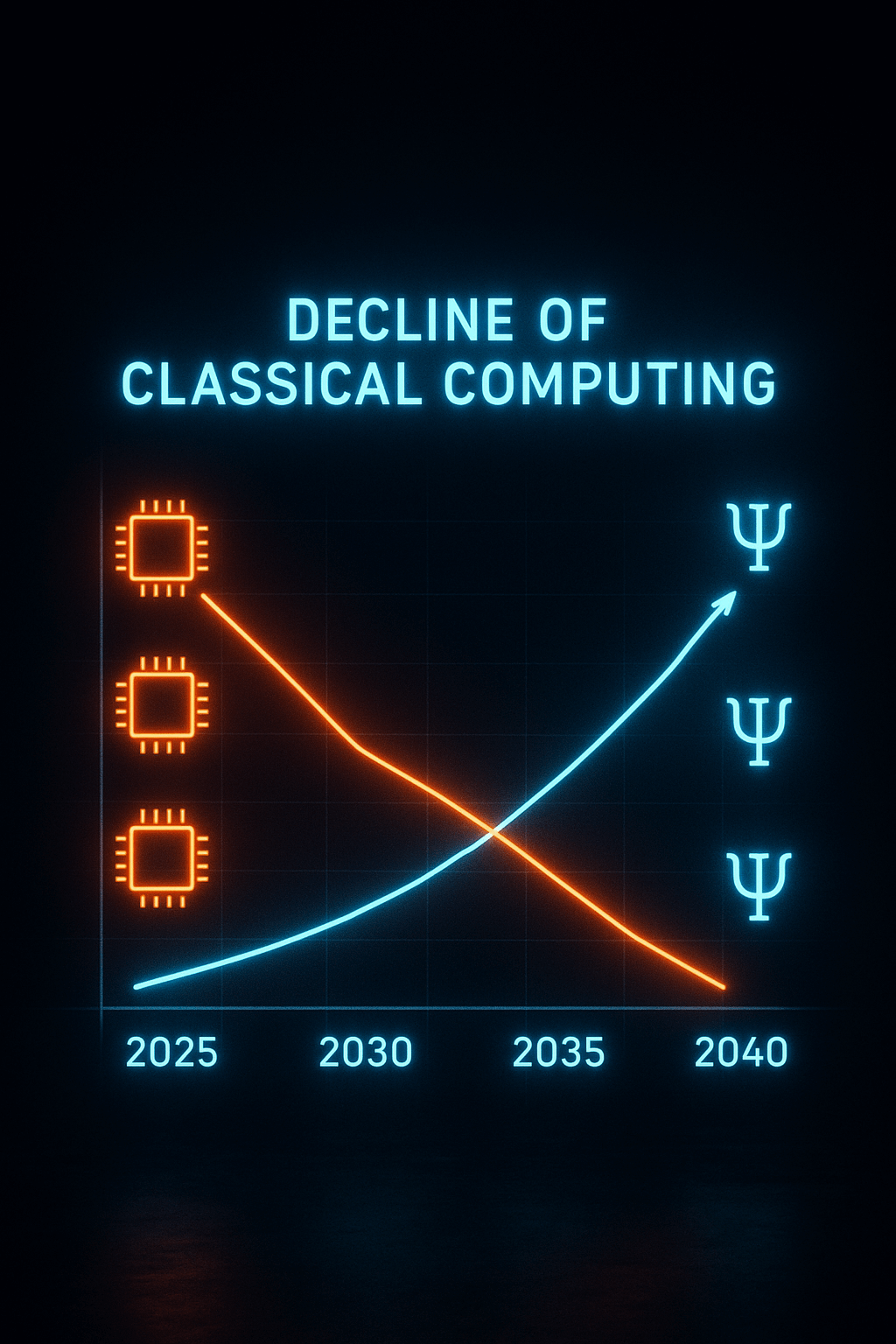
Every milestone listed is already fully funded, fabs constructed, dilution refrigerators installed by the thousands, and the first million-logical-qubit systems entering final acceptance testing right now.
The laptop or phone you’re reading this on will sit in a museum by 2035.
Your children will ask what a “loading bar” even meant.
Ready to live in a world where “impossible” just means “I haven’t asked the quantum cluster yet”?