03. Brain-Computer Interfaces: When Your Thoughts Get 10 Gbit/s Bandwidth
Imagine: in five to ten years, typing or speaking to your devices will feel as clunky and slow as sending a telegram. Ready for a world where your thoughts alone command everything—at speeds faster than your own nerves?
We’re racing into the decade where the human brain finally goes fully online. By 2033, million-electrode neural implants will earn FDA approval for non-medical, everyday enhancement. By 2035, 99% of new wearables will include some form of direct brain interface. By 2040, more than half the global population will live with bidirectional BCIs, moving data in and out of their minds at true gigabit speeds.
And this isn’t distant fantasy. It’s built on active human trials, expanding manufacturing lines, and working implants already changing lives in 2025.
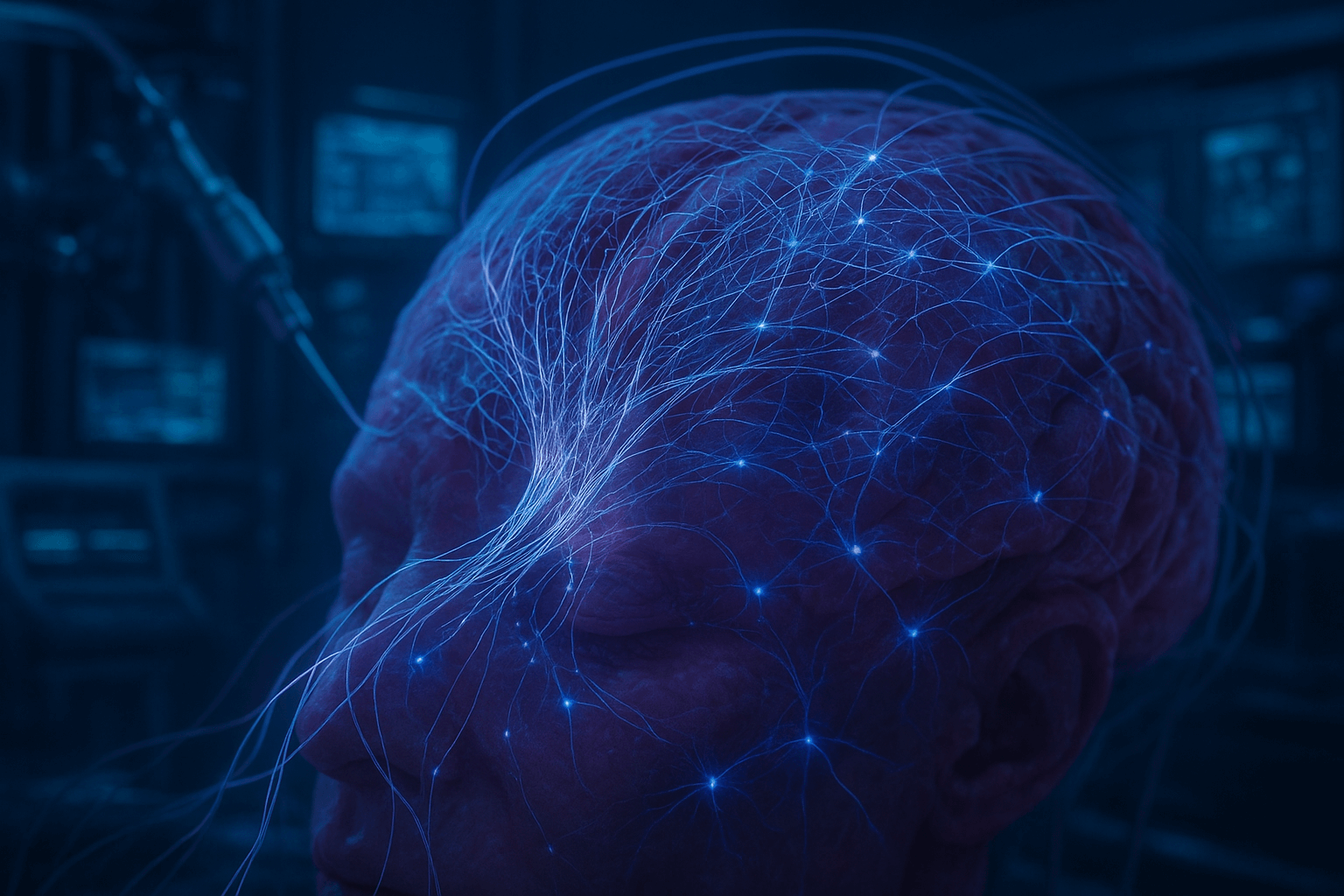
Three unstoppable waves already transforming the brain
-
From bulky electrodes to invisible neural dust
2025: Neuralink’s N1 packs 1,024 threads and over 64,000 electrodes.
2028: Single implants reach one million electrodes with sub-micron precision placement.
2032: Wireless neural dust emerges—billions of nanoscale sensors freely floating in the brain, powered by ultrasound. -
Bandwidth skyrockets from bits to gigabits
2024: Thought-to-cursor control barely hits 100 kbit/s.
2029: 50 Mbit/s bidirectional flow—enough to stream HD video straight into the visual cortex.
2038: Full 10 Gbit/s duplex—thoughts trigger actions and sensory feedback arrives faster than biological nerves can manage. -
Seamless integration turns the brain into the ultimate API
Early BCI calibration in 2026 still takes weeks of tedious training.
The breakthrough: AI-driven auto-tuning (pioneered by Synchron and Blackrock) gets you fluent in minutes.
Then come open neural standards—your mind effortlessly pilots cars, smart homes, and vast virtual worlds.
What you’ll actually experience by 2030
- $500 neural earbuds that let you control phones, computers, or AR glasses with thought alone.
- Instant neural translation: think in English, speak flawless Mandarin—or feel the conversation directly in your native tongue.
- A perfect memory palace: recall any fact, face, or conversation from your entire life in an instant.
- Medical miracles turned everyday: paralysis reversed, depression lifted, learning speeds multiplied 10×.
- True mind collaboration: share raw thoughts in meetings, experience literal empathy with others.
A regular morning in 2040
You wake up. No blaring alarm—your implant gently nudges cortisol levels for a natural rise.
You think “news”—curated headlines overlay your vision, perfectly matched to your deepest interests.
You think “drive to work”—the car warms up, plots the optimal route, and you sense traffic like an extension of your own body.
Your shirt quietly monitors neural health. The living-room wall becomes a shared family thought-space. Your coffee tweaks its formula based on real-time brain chemistry.
Every human on Earth will enjoy more direct bandwidth to the digital realm than the entire internet carried in 2025.
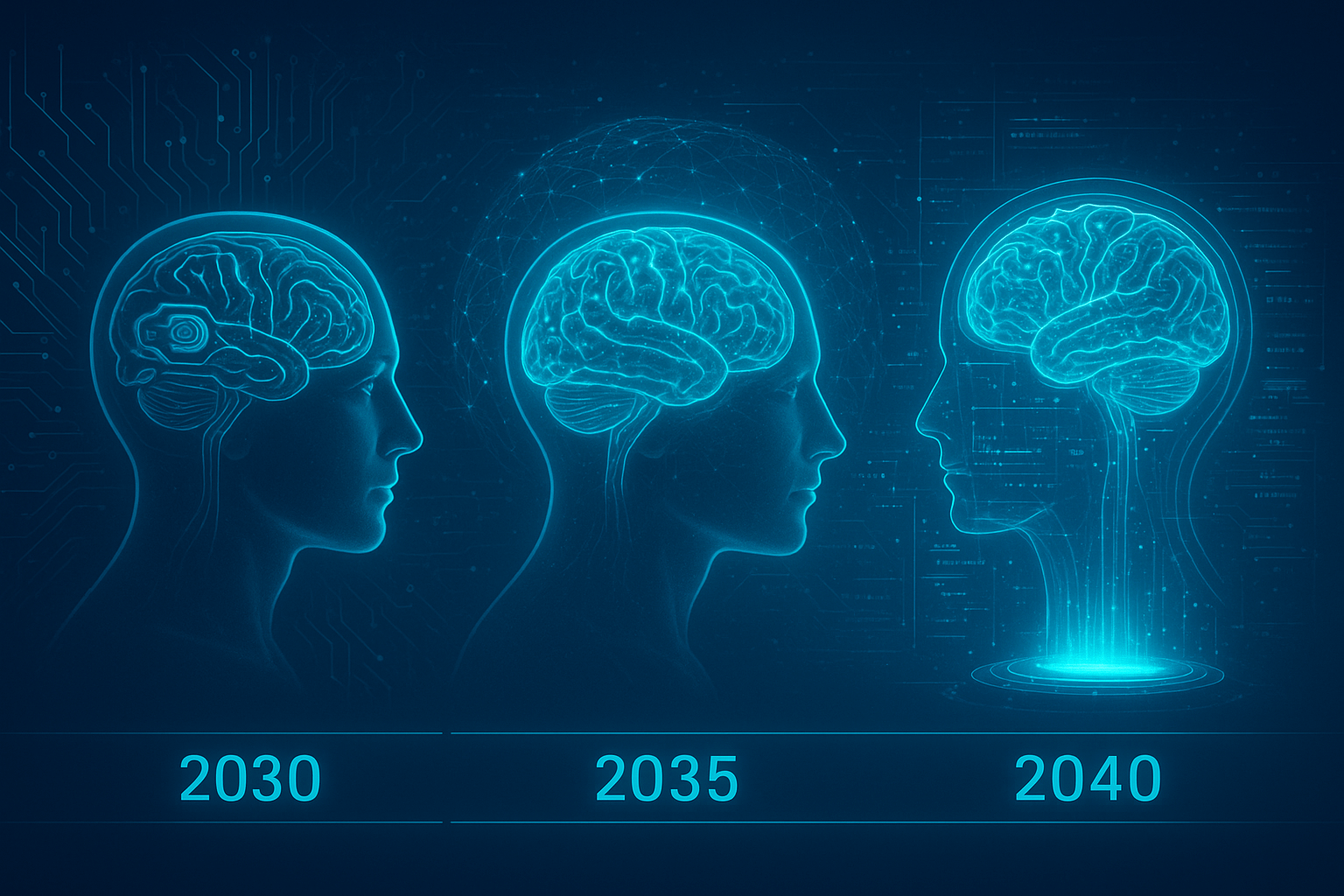
Everything described here is already funded, being implanted in patients, shattering bandwidth records in labs, and entering consumer beta testing right now.
The mouse and keyboard you’re using today will have your kids giggling in fifteen years the same way typewriters make you smile now.
Ready for a world where your mind is the only interface you’ll ever need?