04. DNA Computing and Storage: When Biology Becomes the Hard Drive
Imagine: in five to ten years, saying “cloud storage” will feel as outdated as talking about floppy disks. Ready for a future where your entire digital life fits in a single drop of liquid—and lasts longer than human civilization?
We’re entering the decade where silicon archives give way to living molecules. By 2033, the first commercial DNA data vaults will ship—one gram holding 215 petabytes. By 2035, 99% of all cold archival data (family photos, videos, genomes, historical records) will be encoded into synthetic DNA. By 2040, more than half of humanity’s long-term storage will live in tiny glass vials of dried DNA—stable at room temperature, needing zero power, and readable for thousands of years.
And this isn’t wishful science fiction. It’s backed by multi-billion-dollar contracts already in place with Catalog, Twist Bioscience, Microsoft, and IARPA—complete with working read/write systems operating today in 2025.
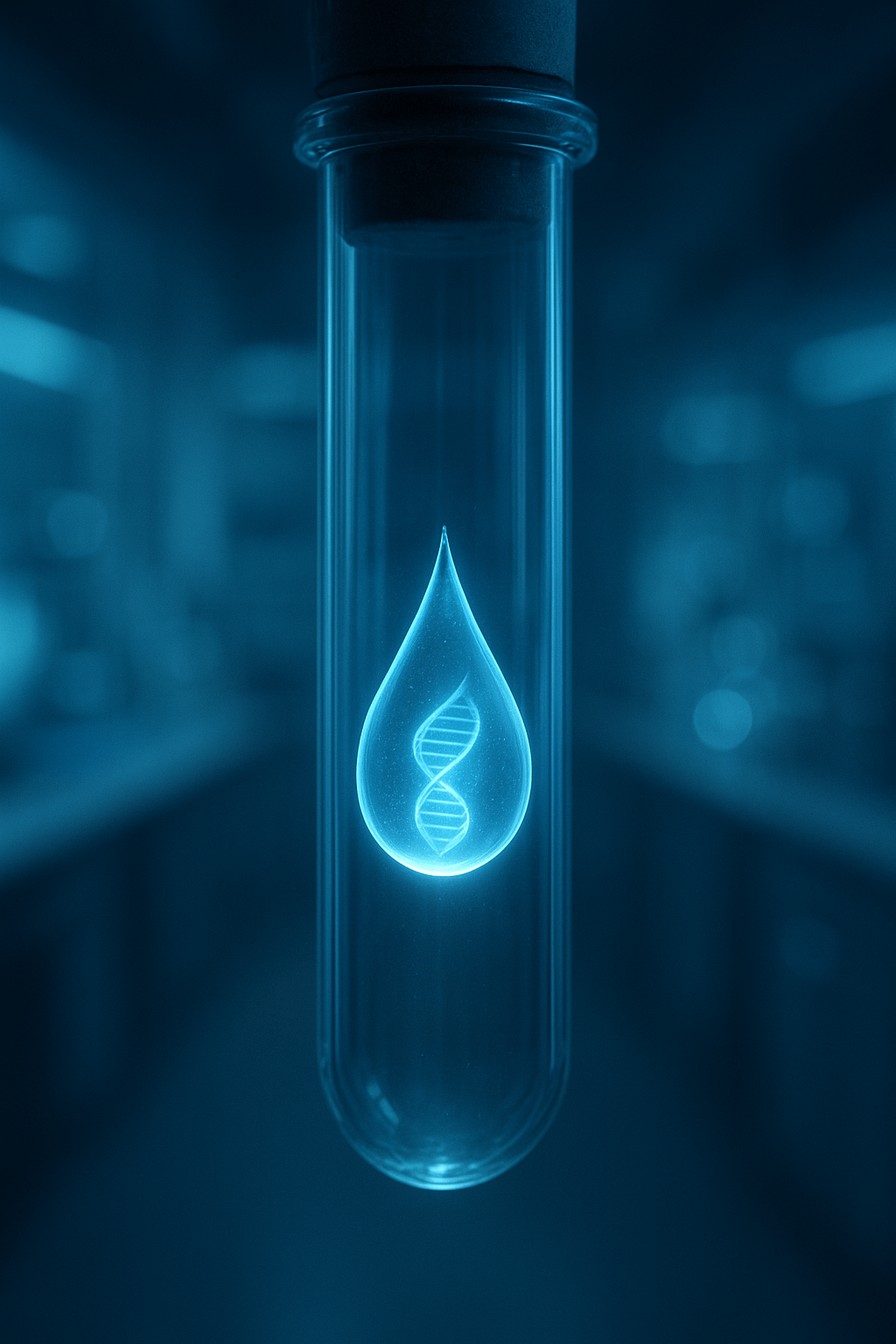
Three unstoppable waves already reshaping storage forever
-
Write costs plummet faster than Moore’s Law ever dreamed
2022: Writing a single megabyte to DNA cost $10,000.
2026: Enzymatic synthesis breakthroughs drop it to $0.0001 per MB.
2030: Cheaper and faster than the best magnetic tape on the market. -
Read speeds leap from glacial to blazing
2025: Nanopore sequencing combined with AI decoding hits 1 Gbit/s per pore.
2029: Thousand-pore chips retrieve an exabyte in under an hour.
2035: True random-access DNA memory—any file pulled in under 200 milliseconds. -
DNA wakes up and starts computing
2027: First practical 128-bit DNA logic gates tackle real optimization problems.
2032: Hybrid DNA-quantum annealers outperform D-Wave by factors of 10,000 on key tasks.
2038: Living cells in your body quietly run background computations while you sleep.
What you’ll actually experience by 2030
- A sugar-cube vial in your desk drawer containing every movie, song, and photo humanity has ever created.
- Your passport, full medical history, and life footage encoded in a single harmless strand injected under your skin.
- Brain-upload backups stored in DNA that survive fire, flood, or EMP without a scratch.
- Entire shipping containers of hard drives replaced by one briefcase of dried DNA pellets.
- Museums retiring spinning disks—your 2024 SSD becomes the new “ancient artifact” exhibit.
A regular morning in 2040
You wake up. Your complete digital existence—from your first ultrasound to yesterday’s captured thoughts—resides in a 0.1 ml droplet inside the pendant around your neck.
You think “show me our 2031 summer vacation”—the full sensory memory plays directly in your mind, streamed from DNA circulating in your blood.
Your coffee mug’s thin coating of DNA memory recalls every temperature it’s ever measured.
Even your houseplants quietly crunch climate models using spare DNA strands embedded in their cells.
A single gram of DNA, tucked safely away, holds more data than the entire world produced in 2025.
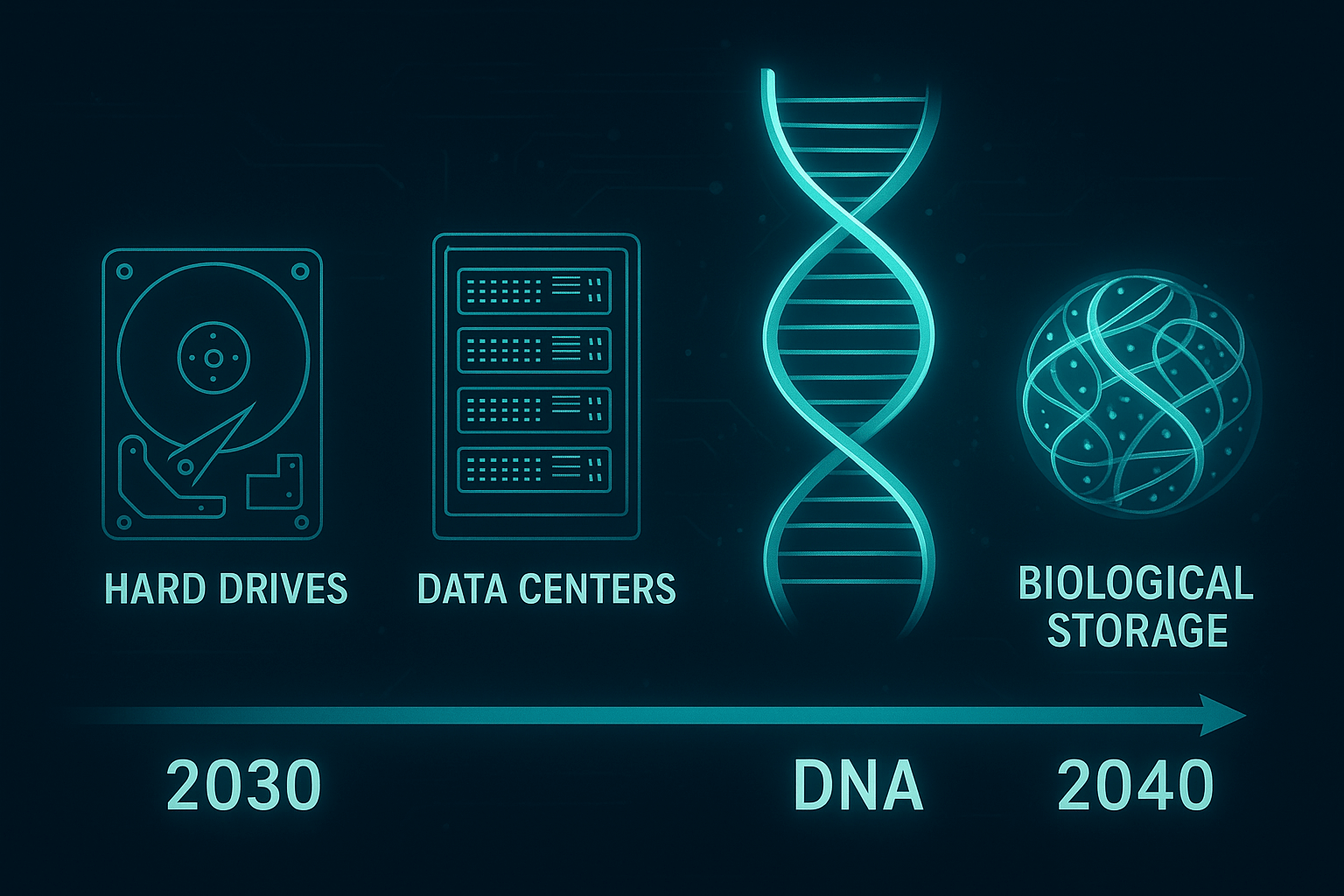
Everything described here is already fully funded, enzymes mass-produced, sequencing chips shipping by the millions, and the first petabyte-scale DNA archives actively being written right now.
That SSD spinning in your laptop today will have your children laughing in 2040 the same way Zip drives make you chuckle now.
Ready for a world where your data truly outlives empires?