06. Neuromorphic Revolution: Chips That Think Like Brains, Not Calculators
Imagine: in five to ten years, the word “GPU” will only come up when reminiscing about old gaming rigs. Ready for machines that don’t just crunch numbers—but truly understand the world, sipping power like a resting brain?
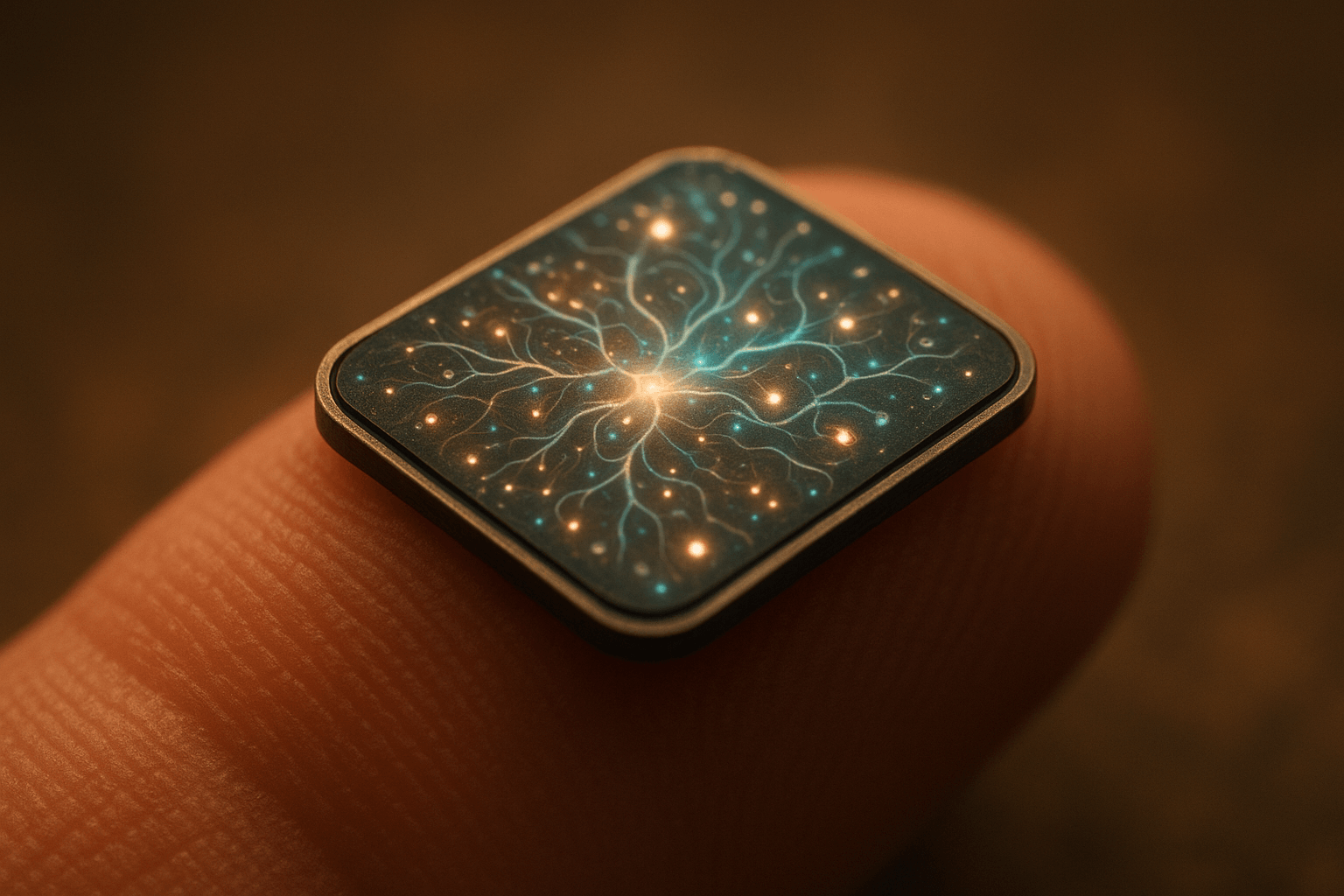
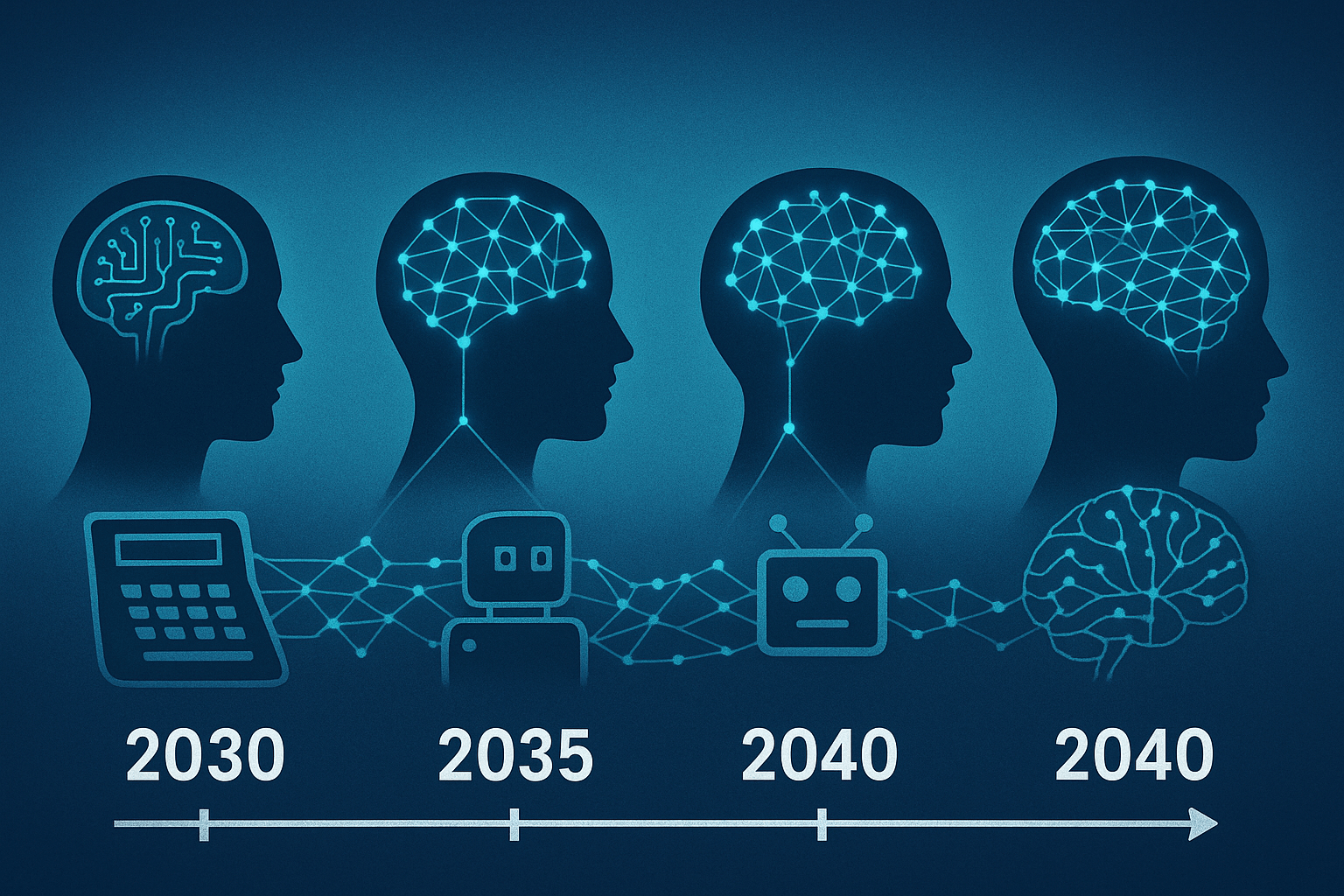
We’re entering the decade where traditional computing hits its final wall and brain-like silicon takes over. By 2033, the last massive GPU data-center clusters will be powered down—simply too costly to keep alive. By 2035, 99% of edge devices (glasses, earbuds, implants, vehicles) will run purely on neuromorphic cores. By 2040, more than half of all intelligence on Earth—human and machine combined—will flow through chips that think like neurons, consuming less power than a single light bulb.
And this isn’t distant speculation. Intel’s Loihi 3, BrainChip’s Akida 2, IBM’s TrueNorth successors, SynSense, GrAI Matter, and Innatera are already in mass production or sampling in 2025—with Apple, Tesla, Meta, and Chinese hyperscalers quietly snapping up every available wafer.
Three unstoppable waves already rewriting intelligence
-
The power wall finally kills the von Neumann paradigm
2026: Training a single frontier model demands 500 MW nonstop.
2028: Loihi 3 handles the same inference workload at just 300 watts—over 1.6 million times more efficient.
2032: Fully analog neuromorphic designs reach 100 peta-ops per watt—the physical limit science has been chasing. -
Spiking neurons replace endless floating-point crunching
2025: Chips already pack 10 million spiking neurons.
2029: One billion neurons and a trillion synapses fit on a single die.
2035: Systems that learn continuously while you sleep—no backpropagation, no distant data centers required. -
Always-on, instant sensing becomes the new normal
2027: Event-driven sensors paired with neuromorphic cores react in microseconds, drawing zero power when the world is still.
2031: Walls, mirrors, and windows turn into always-aware, 1000 FPS intelligent surfaces.
2038: Your home’s brain merges seamlessly with yours—you no longer feel where biology ends and silicon begins.
What you’ll actually experience by 2030
- Earbuds that translate languages in real time on just 5 milliwatts—and never need a charge.
- Cars that perceive and understand the road 1000× faster than today’s best FSD, powered by a coin-sized chip.
- Phones without battery anxiety—they harvest ambient light and body heat effortlessly.
- Robots that master walking in minutes simply by watching you move.
- Neural implants that ease anxiety by gently guiding your amygdala in real time.
A regular morning in 2040
You wake up. Your pillow has tracked your sleep cycles all night and weaves subtle micro-dreams to complete REM perfectly.
You think “coffee”—the kitchen already started brewing eleven minutes ago, spotting your familiar cortisol pattern instantly.
Your shirt senses a chill before you do and warms up proactively.
Your house has been pondering your calendar overnight and quietly cancels two pointless meetings you hadn’t even noticed.
The entire planet’s intelligence now runs on chips that dream, sense, and truly understand—using less electricity than Bitcoin mining wasted in 2024.
Every chip named here is already fabricated, fabs are booked solid through 2029, and the first neuromorphic supercomputers are powering up in 2026.
Those roaring fans and power-hungry GPUs of today will feel as ancient as vacuum tubes do now.
Ready for a world where machines finally understand you—rather than just blindly obey?